
A call comes in: “The radiators are cold at the top again.
I bled them last week and they’re already gurgling.” It’s a familiar pattern for many gas engineers this time of year. The customer expects a quick bleed and move on, but two or three visits later the same complaint returns. Persistent air in the central heating system wastes time, frustrates homeowners, and quietly drives up energy bills through uneven heating and boiler cycling.
Trade discussions and on-site reports show this issue cropping up repeatedly in older properties and systems that have seen recent work. Engineers note recurring bleeds on the same radiators, often alongside slight pressure drops or discoloured water. It’s rarely a one-off trapped pocket from initial filling.
Most Common Causes
Low system pressure and minor leaks top the list. When pressure falls below 1 bar, air is drawn in through any small weakness – often at radiator valves, compression joints on the suction side of the pump, or micro-leaks that don’t show visible water. Refilling via the filling loop introduces more air if not done carefully. Leaks and pressure loss frequently go hand in hand; the system loses water, pressure drops, and air replaces it.
Recent system work follows closely. Installing or replacing radiators, flushing, or any break-in to the circuit inevitably introduces air. Even with careful filling, pockets remain in high points or complex pipe runs until the system has run and been bled thoroughly.
Corrosion producing hydrogen gas appears more often than many realise. In systems with poor or depleted inhibitor, electrolytic or bi-metallic corrosion (especially where steel radiators meet copper pipework) generates hydrogen. It behaves like air – collects at high points, causes cold tops – but the tell-tale sign is dark, sludgy water or a faint smell when bleeding. Hydrogen is flammable, so care is needed during diagnosis.
Less Common but Important Causes
- Faulty expansion vessel on sealed systems. A ruptured diaphragm allows the vessel’s air charge to enter the heating circuit, leading to persistent air that reappears quickly.
- Sticking or failed automatic air vents (AAVs). These can either fail to release air or, worse, allow air in under certain conditions.
- Poor system design or pump placement. Air separators or vents in the wrong position, or pipework that creates negative pressure zones, let air ingress without obvious leaks.
Rare but Possible Edge Cases
Air drawn in via the feed and expansion tank on older open-vented systems (e.g., vent pipe issues or pumping over), or dissolved gases coming out of solution in hard water areas under temperature changes. These are less frequent in modern sealed setups but worth ruling out in Victorian or Edwardian properties.
Why This Keeps Happening
Time pressure on jobs often means systems get filled and bled once, then commissioned without full circulation and repeated venting. Ageing stock – many UK homes still run systems over 15–20 years old with original radiators – sees inhibitor levels drop. Quick repressurising fixes the symptom but not the underlying pressure loss or corrosion. Homeowners bleed the obvious rads but miss the root cause, leading to repeat engineer visits and damaged trust.
Real-World Example
A typical 1930s semi in Manchester with a 12-year-old combination boiler and mostly original steel panel radiators. The customer reported cold tops on upstairs rads every 7–10 days. Initial bleed released air (and noticeably dark water). Pressure was sitting at 0.8 bar. A slow leak was traced to a weeping radiator valve tail. After tightening and replacing the washer, the system was drained, flushed where accessible, fresh inhibitor added, and refilled with careful venting starting from the boiler and working outwards. An auto air vent was fitted at the highest point. No return visits in the following heating season.
What This Means on Site
Each repeat visit eats into the day – 30–60 minutes per call-out for bleeding and diagnosis, plus travel. For the customer, uneven heating means higher gas bills and cold spots. Boilers work harder, cycling more frequently, which shortens component life. Left unchecked, sludge from corrosion can block pipes or the heat exchanger, turning a simple air issue into a far costlier repair.
Practical Diagnostic Approach
- Check pressure first – note the gauge reading and trend. Persistent drop points to a leak.
- Bleed systematically – start at the boiler air vent/pump, then highest rads, working methodically. Observe the water: clear with bubbles suggests air; dark/sludgy suggests corrosion/hydrogen.
- Inspect for leaks – including under rad valves, joints on the pump suction side, and expansion vessel (Schrader valve test or pressure gauge on the vessel itself).
- Test for hydrogen (with caution) – small sample bled into an inverted container; a pop when ignited confirms corrosion.
- Review recent work – any new rads, flushes, or components?
- Check inhibitor – test concentration if possible; top up or recommend full clean if low.
- Run and re-bleed – after fixes, circulate fully, bleed again after 24–48 hours of operation.
Where air returns quickly, consider fitting additional AAVs or reviewing pipe layout.
Key Takeaways
- Persistent air is rarely just “needs bleeding” – treat it as a symptom.
- Always investigate pressure loss and corrosion alongside.
- Proper inhibitor, thorough venting after any work, and addressing leaks early prevent most repeat calls.
- A structured check saves time on site and reduces callbacks.
Air in the system isn’t usually difficult to sort – it’s the failure to find what’s letting it in that creates the repeat work.
If you found this useful, Heatlab.uk designs innovative, problem-solving tools for plumbers and heating engineers — built from real on-site experience.
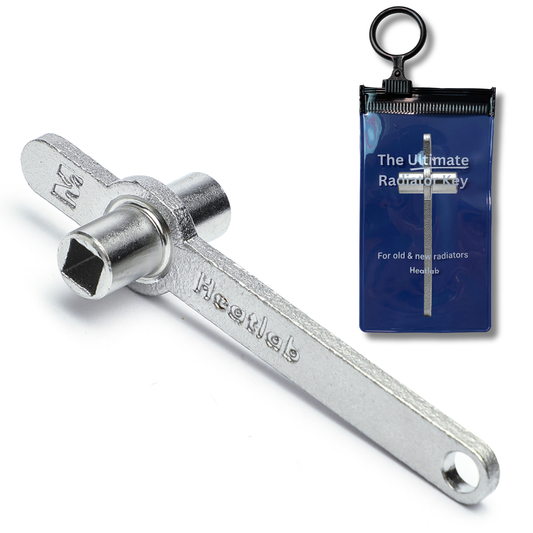
You can get the heatlab ultimate radiator key here